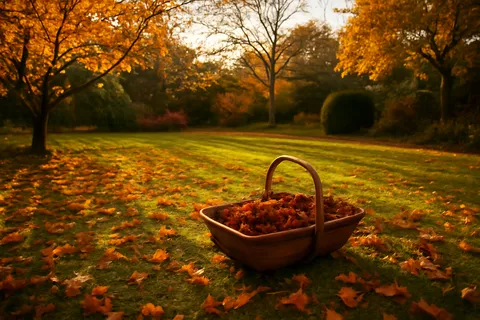
The gardens that look best in March are the ones that were prepared in October. Autumn is the moment when a year's worth of growth — good and bad — needs to be managed before winter locks the soil and the frost starts doing damage.
Here is what to address, in order of priority.
1. Leaf clearance
Fallen leaves left on a lawn for more than a few weeks block light and air circulation, promoting moss and disease. The same leaves in a blocked drain cause winter waterlogging that can damage roots. Clear leaves regularly through late autumn — either collect and compost, or remove from site. This is not optional if you have a lawn worth protecting.
2. Border cutback
Most herbaceous perennials can be cut back to ground level once they have died back. Leave seed heads on plants that provide winter interest or bird food (echinops, rudbeckia, grasses). Cut back the rest. It is tidier, reduces slug habitat, and means less work in spring.
3. Lawn preparation
Autumn is the best time for:
- Scarification — removing thatch before it compacts further over winter.
- Overseeding — the soil is still warm enough to germinate seed, and the reduced competition from weeds in autumn gives new seed a better start.
- Aeration — if not done in spring, now is the time.
- The last feed of the season should be a low-nitrogen autumn fertiliser, not a summer growth formula.
4. Mulching
Apply a layer of organic mulch (bark chips, well-rotted compost) to borders after cutting back. This insulates roots from frost, suppresses winter weed germination, and improves soil structure as it breaks down. A 5–7 cm layer is sufficient.
5. Irrigation winterisation
In climates with frost, the irrigation system needs draining before the first hard frost. Water left in pipes and heads can expand on freezing and split the fittings. Shut off the supply valve, drain the pipes, and — on compressed-air systems — blow out residual water. Note the shut-off location now, before the border has been cut back and it is hidden.
6. Tree inspection
Walk your trees before leaf fall makes inspection difficult. Look for deadwood, crossed branches under pressure, splits in major limbs, or fungal bracket growth at the base. These are easier to assess in late summer or early autumn than mid-winter. If you see something concerning, book a tree assessment before the storm season.
When to do this
In most of Europe, the window is late September to mid-November, depending on the local climate. In Spain, Portugal, and the south of France, you can often go later. In the UK and northern Europe, earlier. The prompt is leaf fall — once leaves are coming down, the autumn work needs to begin.
NeatSpaceCare's autumn cleanup visits cover all of the above in a single scheduled visit. See the seasonal cleanups service →